- Telephone
-
612-9607-4650
(02-96074650)
- Mobile Phone
- 61-4122-03382
(0412-203382)
- Fax
- 612-9034-9666
(02-9034-9666)
- Postal address
-
133 Dalmeny Drive, San Marino Estate, Prestons 2170, Australia
- Electronic mail
- Webmaster:
joeras@vacuumstate.com

Introduction
Hi, my name is Joe Rasmussen.
The Early Years
I was born in Denmark in the inner suburb of Frederiksberg in Copenhagen.
As a cultural centre, Copenhagen is unmatched in the north of Europe. My
Father was considered a young wiz kid and snapped up by the DR, the Danish
Broadcasting Corporation, to head the Dubbing Department (which is
responsible for the sound accompanying the vision). He was both an
electronics and recording engineer as well as a recognised expert on
acoustics. Those early days of TV were heady days and as entertainment
began to exploit the new medium, my Father got to work with some of the
most famous acts in the world in the late fifties and the sixties, as well
as making several movies including the landmark Hamlet at the
Castle of Elsinore starring Christopher Plummer, Robert Shaw and Michael
Caine plus other highlights like the The Beatles at The Tivoli and
Euro Vision Song Contest . These were my pre-teen and teen years and they
were happy days.
In 1965 we moved as a family to Australia. My father did commercial TV
production and finally ended up at the ABC, the Australian Broadcasting
Corporation. He died tragically in an accident in 1974.
Out On My Own
By this time I had left school, had toyed with the idea of an IT
profession but ended up working for HACO-Hagemeyer in their Parts &
Service Department. My job as consultant was as a liaison between the
technicians doing mostly warranty work and controlling parts supply and
ordering from Japan. The brands were Technics, Panasonic (National) and
JVC.
I met the late Allen Wright (1947-2011) in 1975 at a Hi-Fi Show at The
Pavilion in Sydney Showgrounds. The Pavilion has since been converted to a
large movie studio where the Matrix movies were shot as well as the last
two Star Wars movies. Allen was demoing stacked Quads and was the
sound of the show by a country mile. This started a 36 year association
that sadly ended in 2011.
I shortly afterward met up with Allen in his Wentworth Avenue premises to
order a Decca cartridge to be upgraded by the late Garrott Brothers and
hand (or ear?) tuned by the late Rowan McCombe whom Allen affectionately
called 'The Guru.'
We ended up doing so many projects together that my head starts spinning
trying to remember them all. While my first love had always been
speaker design, I found myself working on tube power amps, specifically
hybrids combining tubes (valves) in the front-end and using the
new-fangled MOS-FET devices from Hitachi. Rowan suggested a particular
method of boosting the lack of transconductance (gm) of MOS-FETS,
but the problem was that the idea also made a near ideal oscillator. These
new devices were supposed to be near indestructible, don't believe it.
I blew them up by the bucket loads, but in the process, often working to
the early hours in the morning, the beast was tamed. It used no negative
feedback, which was unheard in Hitachi MOS-FET amps. Vacuum State built a
number of these in mono-block versions for customers, but only on order.
I also started experiments on old Dynaco tube amps - and one was using the
gain stage of the Real-Time Preamp, or RTP, and adapting it as a
front-end, combined voltage stage and phase splitter. The result of this,
with a Triode mode output stage, is to reverberate to this day and is the
basic principle our tube power amps works on to this day.
So I was focussing on power amps, in the meantime Allen was concentrating
of preamps (two of them) what eventually became the RTP and there would
also be a low cost preamp (developed from upgrading Quad preamps) called
the FVP (Four Valve Preamp). Both the RTP and FVP (the latest incarnation
is called SVP) developed to the point where the FVP no longer was a budget
preamp, but the single-ended variant and the RTP was the
differential version (we preferred this description over 'balanced').
The early eighties were lean times; except for getting married to Tina (we
now have three boys). But by mid-eighties things were gradually starting
to look up. Around this time I was doing custom tube work for recording
studios as well as maintenance. This included microphone preamps, tube
compressors, tube DI boxes and mixers. Around this time we also did a
custom RTP preamp for A. J. Van den Hul, which he ordered during a visit
to Australia. The FVP went into production. A PCB only version was sent to
Matthew Bond of Tara Labs (the cable company) and was inserted into a box
design of their own. This became The Passage Tube Preamp and included a
Moving Coil Phono Stage. Samples were sold is the US and Asia. We still
get inquiries about these.
The FVP preamp took on a remarkable life on its own, especially here in
Australia. After Allen went to Europe in 1992 (from memory), it was found
that the improvements of the newer FVPs could be incorporated into older
FVPs, such is the versatility of the design. That is why there are a
number of people who have had FVPs for two decades. Hundreds of FVPs can
be updated to sublime performance. If you can pick up one second hand at
the usual low price (the seller doesn't understand its value), then it can
be brought up-to-date for reasonable dollars.
A Major Diversion
Because of committing to a mortgage and expanding family, I had to find
reliable full-time work at a time when we had a recovering economy. I went
into the transport business for a decade but continued having a 'finger in
the pie' audio wise. Never stopped working on audio.
My focus was also shifting. I never hide the fact that speaker design was
my first love, one that I did not really do for profit. But this
has been a tortuous road to travel. Speaker design is a form of masochism.
It is also an extreme form of discipline, especially if you venture into
computer modelling. High quality hardware and software has increased in
power and reduced in costs. But these are tools and like all tools,
it is the wielder of them that matters most. I am sure plumber’s equipment
in my hands would lead to disaster. As Dirty Harry said, "a man has got to
know his limitations."
I have had fellow speaker designer compatriots in Michael Lenehan of
Lenehan Acoustics and Brad Serhan of Orpheus Loudspeakers. I have shared
freely 'discoveries' and also used them as sounding boards, especially to
see if they could punch holes in my theory or application. As something I
did for love, it has now become a serious affair.
Father of the Buffered Gainclone
Going back to an older topic: Power Amps. But in this case, applying this
as an Integrated Amplifier. I was approached by a friend who had been
reading about so-called 'Gainclones' on
www.diyaudio.com
. This DIY concept born out from the use of National Overture Power ICs as
used by 47 Labs of Japan and others. My friend did not have the necessary
DIY skills to build a Gainclone and hired my help. This obscure technology
became a minor obsession as I could see the balance of high performance
and reasonable cost. But I also perceived that 'inverted' Gainclones
needed a so-called Buffer in front of it. Here was the birth of the
Gainclone Buffer that is now used by DIY constructors throughout
the world. Just do a Google search on the subject buffer gainclone.
That started out a minor craze in Buffers as it was realised they could
facilitate better sound.
But not just being the person who fathered the subject of the Buffered
Gainclone, I did suggest the use of a tube buffer. This eventually
took on a simple DIY project and also a commercial project called the JLTi
Hybrid Tube Integrated Amplifier.
But Buffered Gainclones now abound, whether they be tube, IC or discrete
component buffers, they all originated from this concept that I developed,
the buffered Gainclone. The common expression that the Buffer fleshes
out the sound, more relaxed and with my suggested LPF (Low Pass
Filter) the soundstage is also enhanced. That is my legacy to the
DIY audio fraternity, well, one of them. There was more to come on the
speaker front.
Going Digital From A Vinyl Background
Around 2001 Allen developed an upgrade module to suit the first generation
Sony SACD Players. This took the DSD signal from the VC24 Digital Filter
and buffered and processed it. Later I worked on lowering power supply
noise and Allen joined in and together achieved the result we wanted. Next
was a major improvement in the Clock, particularly in developing an
ultra-low noise power supply.
We needed to look beyond these players alone and the new generation of
multi-players beckoned. This became my lot, to determine which players
were suitable and developing an upgrade program. These players generally
use 'Voltage DACs' where no I/V (Current to Voltage Converter) is
required. Our Clock Technology, noise suppression and a custom output
stage that required no ICs and no voltage boost. These were sold under the
moniker JLTi.
Analog Again
Back to analog, Allen had identified a particular device used for video
purposes, low noise, no internal compensation and no feedback required.
As its noise specification was suitably low with low source impedance, a
la Moving Coil cartridges, it was decided this could potentially make for
an interesting Moving Coil Phono Stage. As Allen was busy with moving his
business from Munich in Germany to Switzerland, I took it upon myself to
do the actual development and produce working proto-types. Some of these
were dispersed locally here in Australia and also a number of them went to
the US, the first going to Roger S. Gordon, reviewer for Positive
Feedback.
Eventually the production of the phono stage went to Switzerland using
much fancier metalwork. It was also given the name JLTi Phono, where JLTi
stands for Just Listen To It. On a cost versus performance, its audio
quality is unmatched, and that is not just our opinion. See
Positive Feedback Review.
Revisiting Tubes
During a discussion by Menno Vanderveen during the European Triode
Festival in 2006, the problems troubling the designer of audio
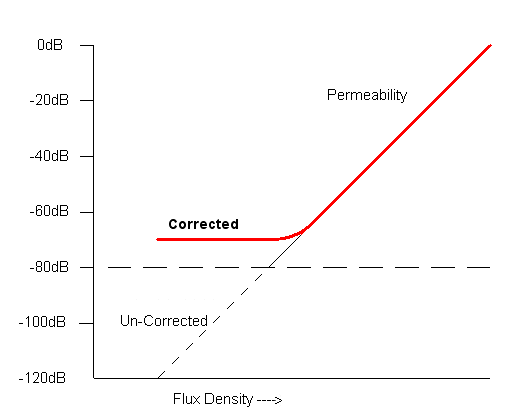
transformers were highlighted. This included memory (hysteresis) and
permeability, which is the ability of the signal to transfer from the
primary to secondary in tact. This directly related to the density or
degree of magnetisation. The real problem here is that permeability is
reliant on a healthy signal level. Yet the dynamic nature of music
contains very low levels at the beginning and end of a transient.
Further private discussions with Menno and I suggested a solution that
takes advantage of the excess bandwidth of the output transformer. A
method of exciting the transformer well above hearing range and yet low
enough not to cause damage further down the line, such as the Tweeter.
The result is now available as the LEM, Linearity Enhancement Module.
If you have a Tube Power Amplifier of any type, but especially Push-Pull,
contact me about having the LEM installed. It can also be converted to
Virtual Triode Operation, which perfectly compliments the LEM.
Digital Again
We forget that digital players have an analog side to them - and that is
what we connect our Interconnects to on the rear panel.
We had been avoiding players with Current DACs for some. It needs to be a
Current-to-Voltage Converter, or I/V Converter for short. Very tricky
indeed.
But finally we came up with a potential solution based on “Diamond
Transistor” device. Our own I/V Converter Module is now a reality and will
find its way into players like the latest models from Oppo with Sabre DACs
and Yamaha, Sony and more, using Burr-Brown DACs.
Now and The Future
Commercial speaker design with a famous name. The latest Oppo BluRay
Players are amazing, especially the Oppo BDP-95, now the Best Player I
have ever heard with “SAW” Clocking.
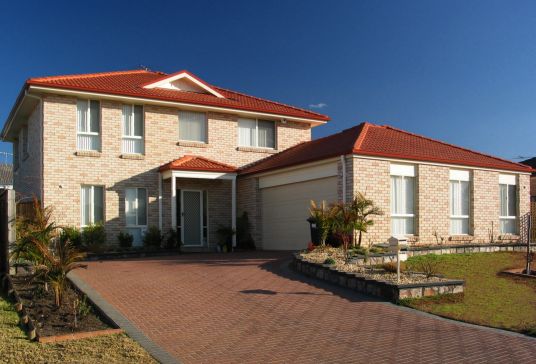
As a family we continue to live in the South-West of Sydney where we have
a two-story house. The front of the house contains my work-shop, dedicated
sound room and storage. The immediate outdoors in front also doubles up as
acoustic measurement area for capturing data to model loudspeakers.
My boys are all interested in music, playing a number instruments such as
piano, acoustic and electric guitars and clarinet. My oldest has been
studying Spanish Guitar for nearly eight years and number two plays piano
and keyboards as well as electric guitar.
In the last decade I have travelled regularly to Europe, attending the
European Triode Festival, meeting up with Allen Wright at Vacuum State
(next time going to Europe is not going to be the same) and seeing
relatives in Denmark and an errant brother in Norway.
Visitors here are always welcome. I am here most of the time, so please do
not hesitate to give me the opportunity to play host for an hour or two,
demonstrating latest developments etc. It is as they say, listening means
everything, and talk is cheap. Let the ear be the final arbiter.
Joe R.
|